
A contractor who has worked both markets explains what Maryland homeowners are missing and why that is about to change.
I have been installing paver driveways, patios, and pool decks in both Florida and Maryland for years. That firsthand experience in both markets gives me a clear view into why this gap exists and why I believe it is about to close. The short answer? Maryland homeowners have been undersold on one of the best investments they can make in their property.
How Florida Became the Paver Capital of the Country
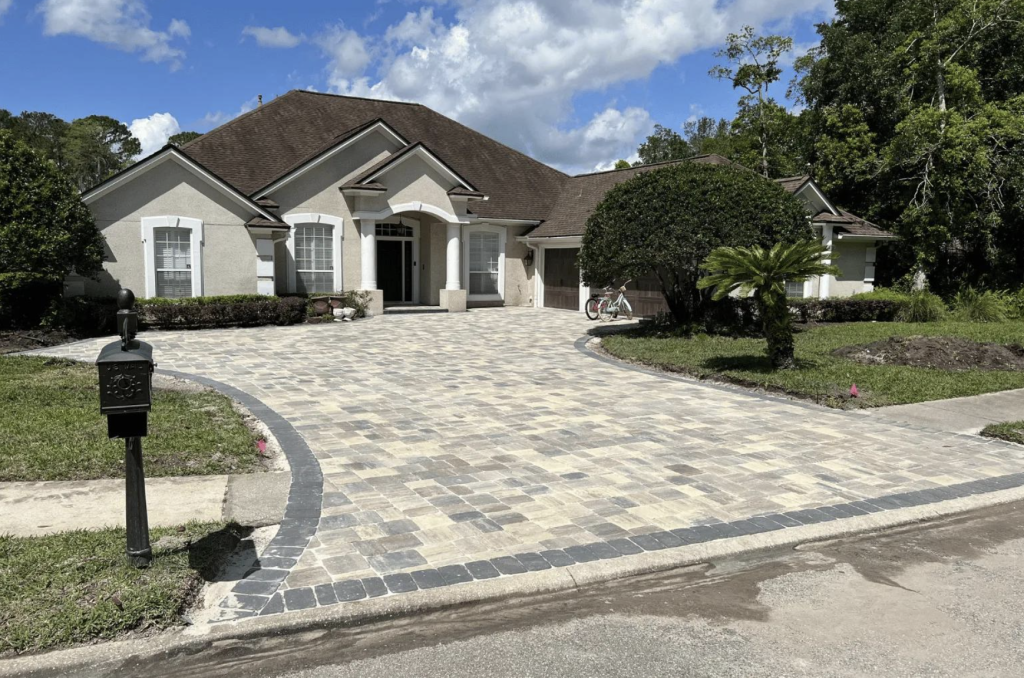
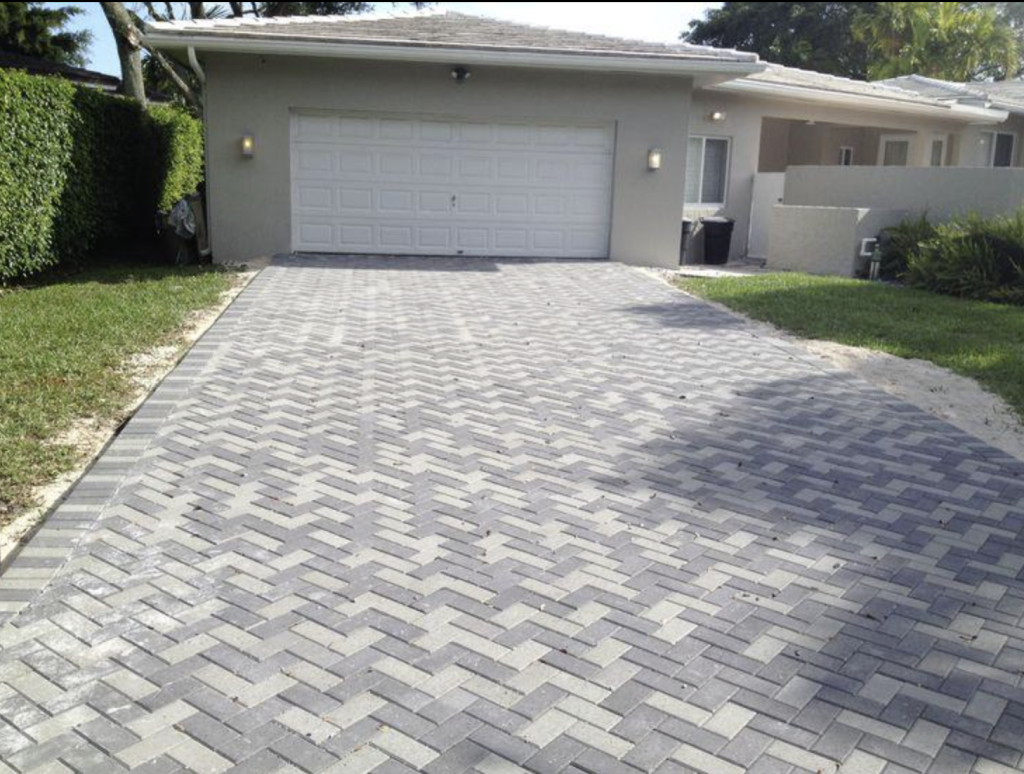
Florida’s paver culture didn’t happen by accident. It happened because of concrete. In the intense Florida heat, traditional poured concrete slabs crack, shift, and deteriorate faster than almost anywhere else in the country. The sun bakes it. The humidity gets underneath it. The ground moves. Developers and contractors learned decades ago that individual pavers, which flex and move independently, simply perform better in that environment.
Once pavers became the go-to choice for new construction in Florida, they became the expectation. Buyers started demanding paver driveways. Entire neighborhoods started looking a certain way, and that aesthetic standard became the norm. Today, a Florida home without a paver driveway is the odd one out. Maryland took a different path, but not because pavers are less suited for our climate. This is quite the opposite.
If you have ever driven through a neighborhood in Naples, Orlando, or Tampa, or anywhere else in Florida, you have probably noticed something. Many driveways are made with pavers. Beautiful, interlocking stone or concrete in every color and pattern you can imagine. Then you come back home to Maryland and look down your street. Asphalt. Asphalt. More asphalt. Where are all the paver driveways in Maryland?
The Biggest Myth About Pavers in Maryland: Cold Weather
The number one objection I hear from Maryland homeowners is this: “Won’t the pavers crack or shift in winter?” It’s a fair question, and the answer surprises most people. Pavers actually handle freeze-thaw cycles better than concrete slabs, making a paver driveway and excellent choice in Maryland.
Here’s why: when water gets into solid concrete and freezes, it expands and the slab has nowhere to go. It cracks. It heaves. That’s why you see crumbling concrete driveways all over Maryland, sometimes just a few years after installation. Pavers are different. Because they are individual units set in sand with flexible joints, the freeze-thaw cycle has room to work. The system flexes slightly rather than fracturing. And Maryland’s clay-heavy soil, which shifts seasonally more than most people realize, is actually a strong argument for pavers over rigid concrete.
What determines performance in cold climates isn’t the pavers themselves. It’s the installation. A properly compacted gravel base deep enough to sit below the frost line, correct drainage to prevent water from pooling beneath the surface, and proper joint sand that locks the system in place. Done right, a paver driveway in Maryland will last 30 to 50 years. Done wrong, any driveway in any material will fail. The difference is the contractor, not the climate.
What About Salt and Snow Removal?
This is where pavers have a real advantage over concrete in Maryland specifically. Concrete is notoriously vulnerable to de-icing salts. If you have ever seen a concrete driveway that looks like it has been eaten away, with pitting, spalling, and crumbling at the surface, that is salt damage. It is a common problem in our winters.
Quality concrete pavers are manufactured to be dense and resistant to salt penetration. They hold up to the same de-icing treatments Maryland homeowners use every winter without the surface degradation you see with poured concrete. Snow removal works exactly the same as any hard surface, with no special equipment or techniques needed.
Why Maryland Defaulted to Asphalt
If pavers perform this well in Maryland, why hasn’t the market moved that way? A few honest reasons. Most Maryland subdivisions were built with asphalt as the standard because it’s cheaper upfront. Builders set the expectation for entire neighborhoods before homeowners ever had a say. Without seeing pavers everywhere, most buyers never think to ask for them, and the myth about cold-weather performance has lingered long enough to keep a lot of people on the sidelines. None of this means pavers don’t belong in Maryland. It just means the market hasn’t caught up yet to the value of a paver driveway.
What You Actually Get With a Paver Driveway
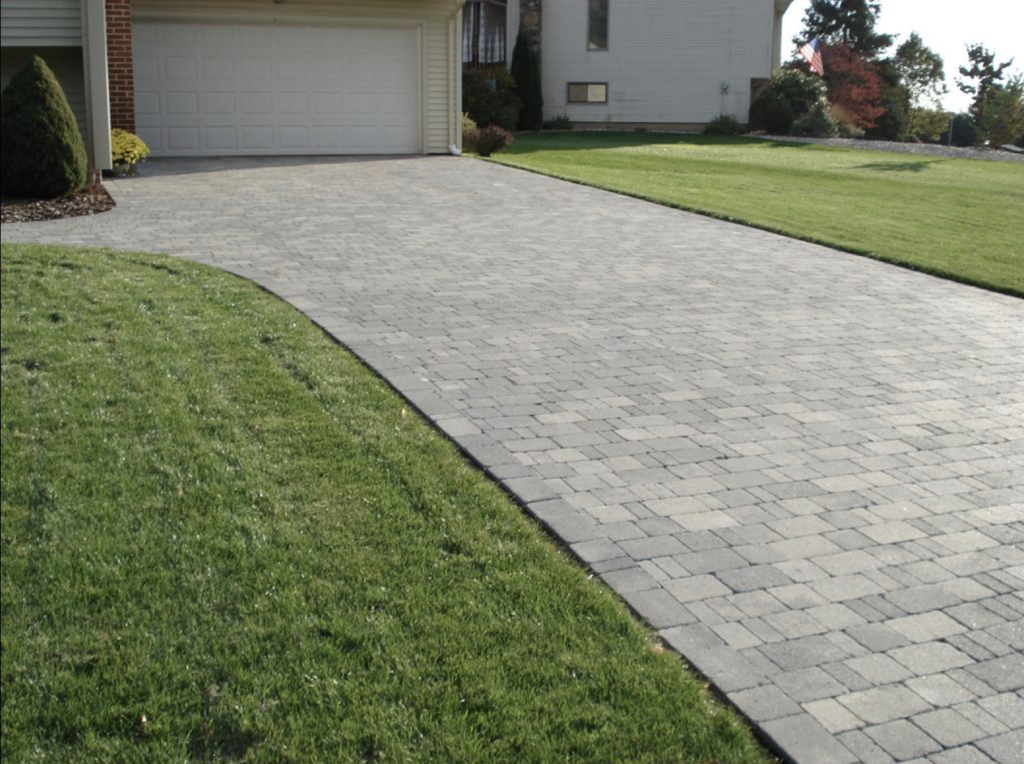
On a street full of black asphalt, a paver driveway stops people in their tracks. It’s the single highest-impact visual upgrade you can make to your home’s exterior. The variety of colors, patterns, and styles means it can complement any architecture, whether traditional, modern, craftsman, or colonial. Buyers notice it immediately, and it signals the kind of quality and attention to detail that affects what people are willing to pay.
From a longevity standpoint, asphalt needs sealing every few years and typically needs replacing in 15 to 20 years. A well-installed paver driveway lasts 30 to 50 years. If a paver is ever damaged from a heavy vehicle, a tree root, or anything else, you replace that single paver, not a section of asphalt or a poured slab. The repair cost difference is significant.
There is also a drainage angle worth mentioning. Permeable paver systems allow water to filter through the joints rather than run off the surface. For homeowners dealing with pooling, runoff issues, or HOA requirements around stormwater management, this is a genuine functional advantage on top of everything else.
Maryland Is Ready for This Shift
I have watched the paver market grow in Maryland year over year. More homeowners are coming back from trips to Florida, the Carolinas, and Georgia and saying, “I want that.” More buyers are arriving to home tours and noticing which houses have pavers and which don’t. The awareness is building. The homeowners who invest now are getting ahead of a trend that has already transformed entire states. They are differentiating their properties on streets where they are still the only one. And they are doing it with a product that is genuinely better suited for Maryland’s climate and soil conditions than the asphalt that most people default to out of habit. The question isn’t whether pavers make sense in Maryland. They always have. The question is whether you want to be ahead of the curve or behind it.
Ready to Bring a Florida-Level Driveway to Your Maryland Home?
Maryland Pavers has installed paver driveways, patios, walkways, and pool decks across the region, with experience in both the Florida and Maryland markets. We know what a well-built paver system looks like and we know how to build one that performs for decades in a Maryland winter. Contact us today for a free consultation and quote.
Leave a Reply